
Library Manager
Manage your library—your way. Keep a running list or organize archived books into little stacks. i.e. Beach Reads, Cozy Covers, True Crime, etc.
Explore Transhumanism: 7 Must-Read Science Fiction Books
From highly-refined cyborgs fitted with sleek cybernetics to digitized minds and biological overhauls, these sci-fi stories give us riveting insight into body augmentation and transhumanism, both the potential benefits and very real dangers.
The age of machines is no longer a thing of the distant future—it’s nearly upon us.
For decades, transhumanism (humans enhancing their physical and cognitive abilities through technology to transcend their current limitations) and body augmentations have been relegated to the realm of science fiction, explored in great detail through some truly amazing books.
But as we’re getting closer and closer to that future, AI becoming more prevalent every day, it’s more important than ever to read stories that examine what might happen when technology advances to such a degree that machines become an integral part of not only our society, but even our bodies and brains.
I’ve curated a little stack of top-tier sci-fi books that feature the body augmentation and transhumanism trope, stories that explore the concept from a wide range of fascinating angles and say “Here’s what the future just might look like sooner than you think.”

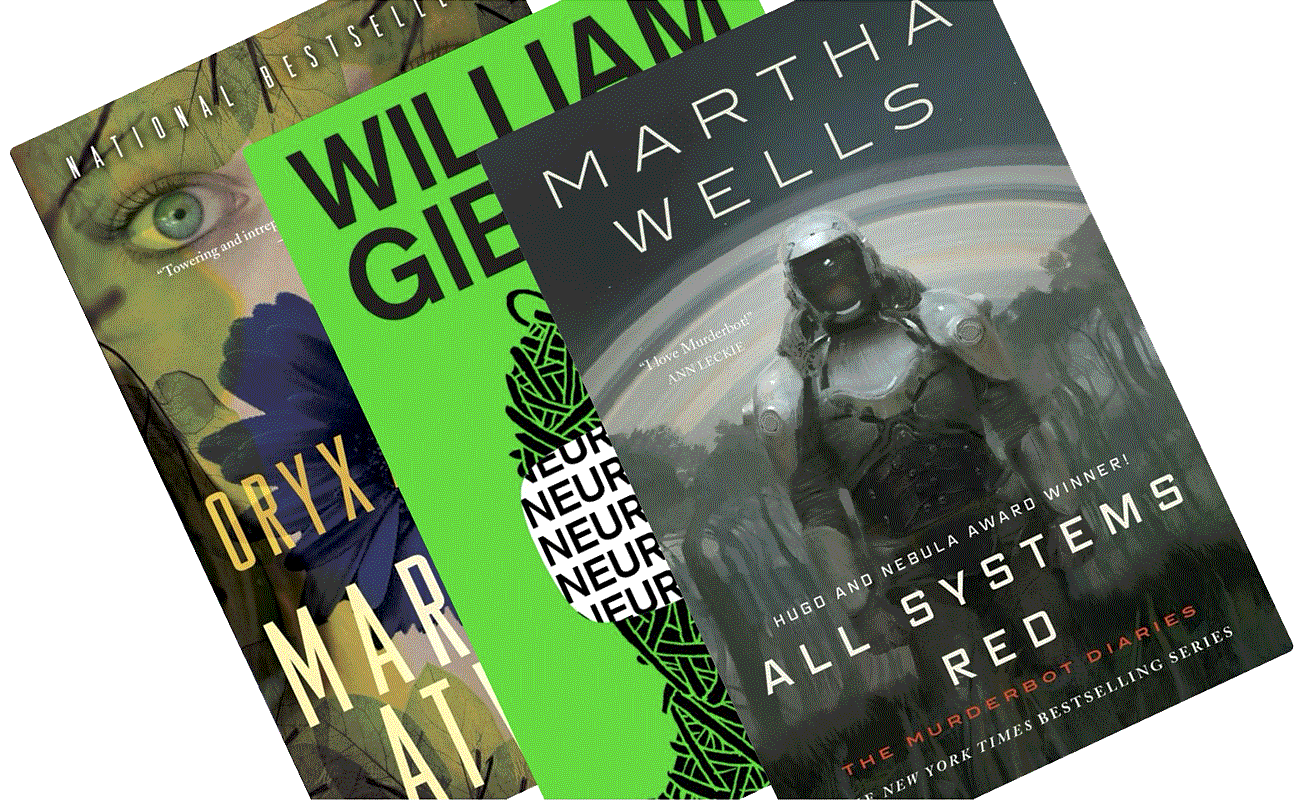
All Systems Red takes a humorous look at transhumanism and body modification. The titular hero is made of both machine parts and organic tissue, engineered for combat but also given enough humanity to feel pain and have emotional responses. When Murderbot hacks the governor module that places him firmly under the control of the corporation that created him, he finds himself asking, “What—or who—do I want to be?”
It’s an exploration of humanity from the other side, a machine gaining sentience, self-awareness, and free will, and how he perceives the humans who see him as sub-human or disposable.
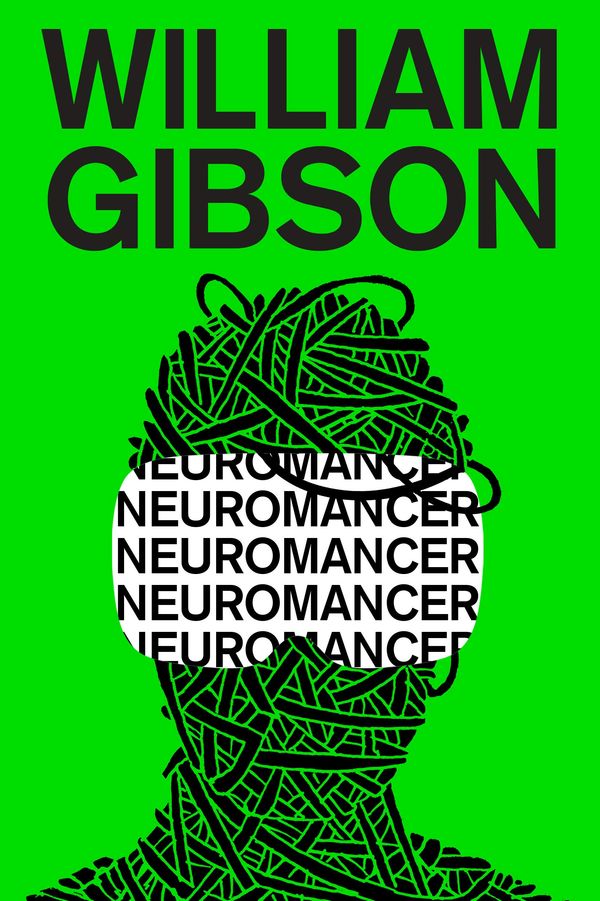
Molly Millions is, to me, one of the most iconic examples of the body augmentation trope. Her whole body is cybernetic—from mirrored lenses to retractable finger blades to enhanced reflexes—to turn her into a fighting machine. But William Gibson uses these modifications to explore not only how people survive, but how we humans often treat our bodies as commodities.
It’s a riveting look at the dangers of seeing our bodies only as a form to upgrade for maximum function, trading away our humanity in the name of utility.

Margaret Atwood delivers a look at transhumanism not through the lens of technology or cybernetics, but genetic engineering. Bioengineering is humanity’s key to creating the perfect human body, eliminating flaws and inefficiencies, and creating a new species of lab-designed, post-human beings: the Crakers.
It’s a fascinating look at modern perspectives on what it means to be the “perfect” human, the dangers of augmentations being used to manipulate society, and the danger of transhumanist ambition (which runs the risk of sliding into genocide and eugenics).

In Altered Carbon, we are shown a world where our entire existences have been boiled down to a hard drive (“stack”), and bodies are simply the “sheaths” that serve as the host for our consciousnesses. This separation between the mind and body is the ultimate demonstration of transhumanism as a concept. The mind is at the core of humanity, and thus the body becomes replaceable and disposable.
Atop the excellent sci-fi worldbuilding and compelling character, I really enjoyed the exploration of socio-political hierarchies—done by showing how the poor receive only old, damaged, or mismatched bodies, and the rich get the best bodies money can buy.

Run Like Hell is one of my favorite cyberpunk reads of 2026, and a brilliant addition to this list!
Raide gets caught up in a conspiracy over a mysterious package that his friend dies trying to deliver. In his efforts to get it where it needs to go, he gets terribly wounded—but luckily, he’s got a spare body stashed for a swap.
This book is a fascinating exploration of the cost of changing bodies, in a way that feels both incredibly futuristic and germane to the current experience so many people are undergoing in discovering their gender identities. It’s also insanely fast-paced, and a wild breakneck adventure I loved from start to finish.

Emiko is a “New Person”, genetically engineered to be obedient, beautiful, productive, and flawless. Though biologically superior, she’s treated as sub-human—a grim insight into how easily the creations of mankind can be dehumanized, abused, even reviled.
The story looks at the dangers of treating such beings as intellectual property, designed to be controlled and serve, with no autonomy or free will. I love how it posits the hypothesis that if humankind could create the perfect genetically engineered person, it would see them only as someone to dominate, someone beneath them on the hierarchy of existence. To quote Rick and Morty, “it’s slavery with extra steps.”

In The Stars are Legion, we’re taken into world-ships built like wombs, with living, pulsing walls that can digest and absorb human flesh and use it to regenerate limbs, treat wounds, and rebuild entire bodies—or the ship itself—from scratch. The characters are reborn over and over, sometimes with no memories of who they were in previous lives, with little or no sense of identity.
This book uses transhumanism as the lens through which to explore memory as identity, the survival of self in the face of a total lack of past, and bodily autonomy and biopower.
More Little Stacks of Science Fiction
7 Sci-Fi Books With Fascinating Alien Worlds
Meet extraterrestrial civilizations stranger than anything you've ever read.

Scariest Rogue AI Books About Machines We Can't Trust
High-stakes stories where creation turns on its creator.
7 Modern Time Travel Books You Need to Read
From intimate journeys of love and loss to epic time wars, these sci-fi novels explore the endless possibilities (and peril) of time travel.