
Library Manager
Manage your library—your way. Keep a running list or organize archived books into little stacks. i.e. Beach Reads, Cozy Covers, True Crime, etc.
Top Science Fiction Series With Female Leads
From iron-fisted dystopias to corporate empires, these six science fiction novels showcase women navigating and challenging the impossible and rising to become legends.
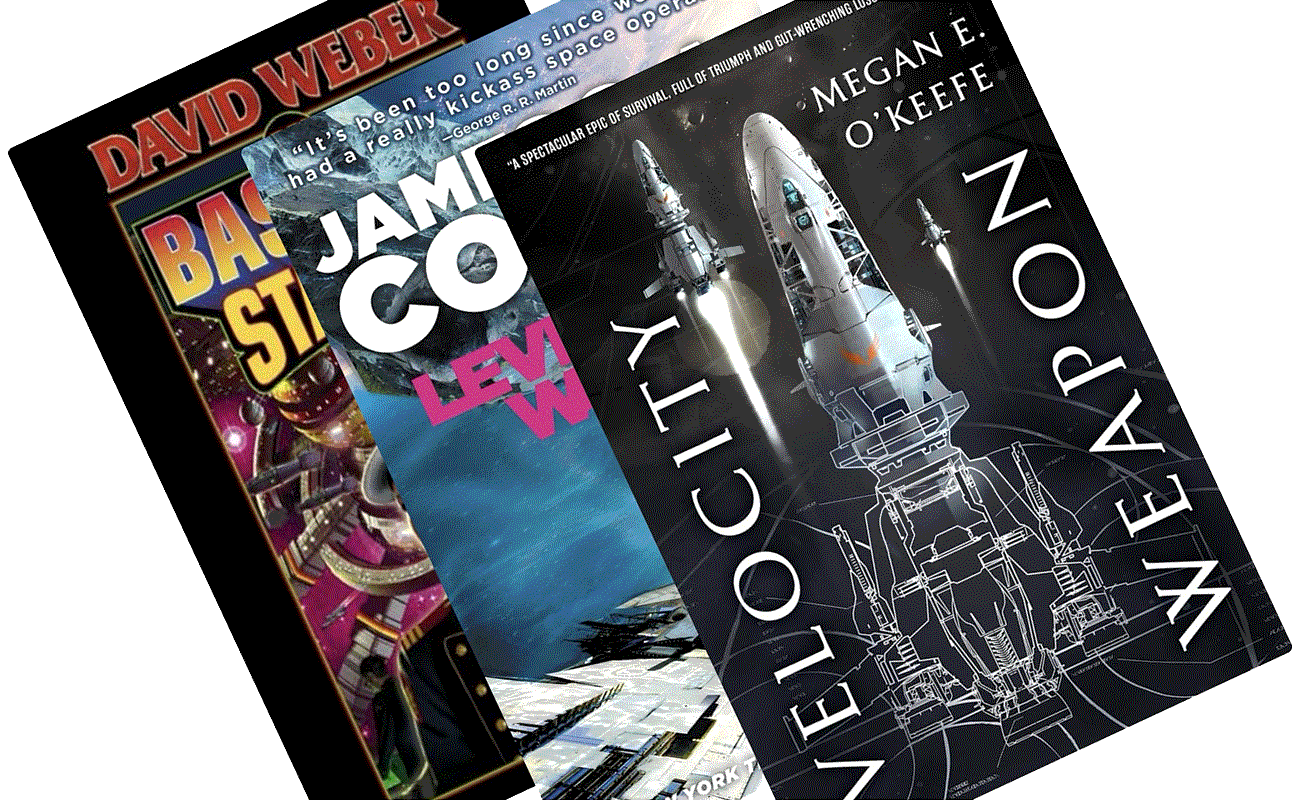
When humanity takes to the stars, women lead the charge!
These six sci-fi series are led by strong, competent, capable women who know their way around starships, blaster rifles, or the galactic negotiation table. Their stories will give you all the excitement you could ask for as you sail through the stars or take battle to the enemy—both human and extraterrestrial.
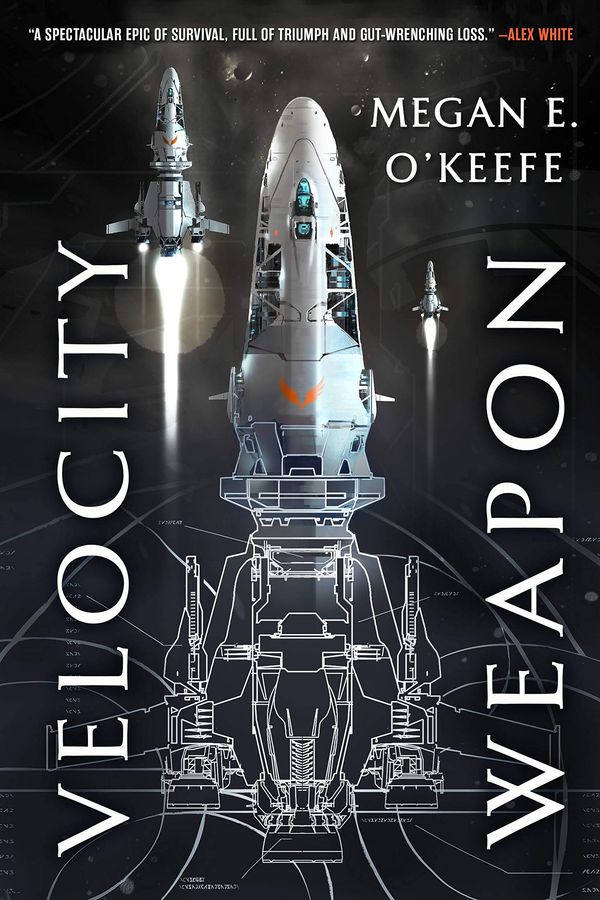
Velocity Weapon introduces us to Sanda Greeve, a gunnery sergeant in the Protectorate military who finds herself ripped away from her twin brother and cast centuries forward in time. She’s no egghead or politician, but she’s a soldier, practical, disciplined, and laser-focused on her one important mission: finding her way back to her brother.
Though cut off from all her fellow soldiers and her entire chain of command, she’s not going to let it stop her from figuring and fighting her way out of the impossible situation. She’s a major badass who just keeps rolling with the punches and doesn’t let anything stop her.

The Expanse features some of my all-time favorite female characters in sci-fi: Bobby Draper, the hulking Martian Marine door-kicker and run-and-gunner; Naomi Nagata, the gritty and cunning Belter who happens to be one of the best engineers and pilots in the system; and Chrisjen Avaserala, the Earth politician and power broker who is as ruthlessly intelligent as she is foul-mouthed.
These women and many others make The Expanse one of the best modern sci-fi series, both on the page and on the screen of SyFy’s truly excellent TV show.

Honor Harrington is the first name that springs to mind when I think of female-led sci-fi series. It’s the largest series—fourteen books with multiple spin-offs—and the character herself is one of the most powerful in sci-fi.
I love everything about her hyper-competence, duty-driven, and above all, her moral clarity even under the most intense pressure. I’ve enjoyed every minute I’ve spent reading her adventures filled with naval battle strategy, political maneuvering, and fighting to survive against impossible odds in the way that David Weber writes best.

Spensa Nightshade is a raw recruit with a chip on her shoulder and the burning need to prove that she will be the bravest pilot that ever lived, if only to erase the stain on her family name after her pilot father was branded a coward.
She’s incredibly skilled, bold to the point of recklessness, trains obsessively, and talks a big game, but underneath, she’s secretly worried she’s a coward, too, and will freeze up when she’s most needed.
It’s a fascinating dichotomy that makes her a character you can absolutely love watching grow and come into her own through the series.

Vatta’s War is similar in nature to Honor Harrington, but without the aristocratic flair.
Kylara Vatta is a disgraced former military student who’s sent to command a boring freighter ship to avoid further embarrassing her family, only to find herself drawn into conflict with pirates, dragged into corporate warfare, and fighting off assassinations.
She’s intelligent, incredibly adaptive on the fly, and her scrappy nature makes her a character you can’t help but love. That the author is former Marine Corps herself makes the writing feel so authentic and engaging on every page.

I love the premise behind The Imperial Radch Trilogy: a massive imperial warship AI that once controlled thousands of human bodies (ancillaries) has been reduced to just one, the woman Breq, which is all too mortal and a weakness that the once-powerful ship struggles to deal with.
It’s not military sci-fi like my above recommendations, but instead more of a space opera that deals with more personal issues like moral conflicts, the fracture of the ship’s identity, the battle between loyalty and autonomy, and the empire’s war with itself.
More Little Stacks of Science Fiction
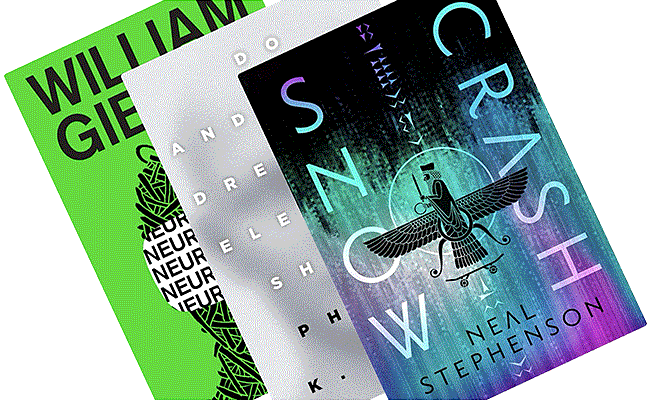
Best Cyberpunk Books Set in Sprawling Megacities
Wander through neon-lit sprawls, hacker underworlds, and futures where the line between machines and man blur in these seven sci-fi books, where towering cyberpunk megacities pulse with data and danger.
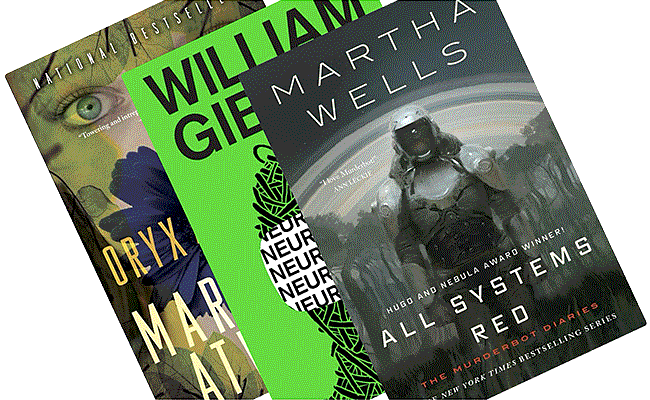
Explore Transhumanism: 7 Must-Read Science Fiction Books
From highly-refined cyborgs fitted with sleek cybernetics to digitized minds and biological overhauls, these sci-fi stories give us riveting insight into body augmentation and transhumanism, both the potential benefits and very real dangers.
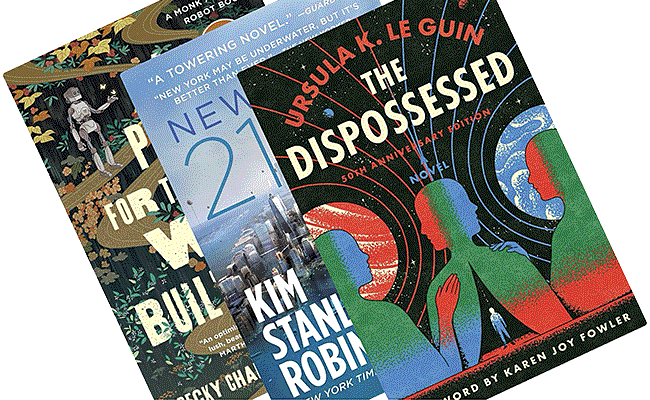
Solarpunk Books That Imagine a More Hopeful Future
Journey to cities, planets, and universes where technology builds a better future and humanity lives in harmony with the worlds they’ve colonized in these six sci-fi books.