
Library Manager
Manage your library—your way. Keep a running list or organize archived books into little stacks. i.e. Beach Reads, Cozy Covers, True Crime, etc.
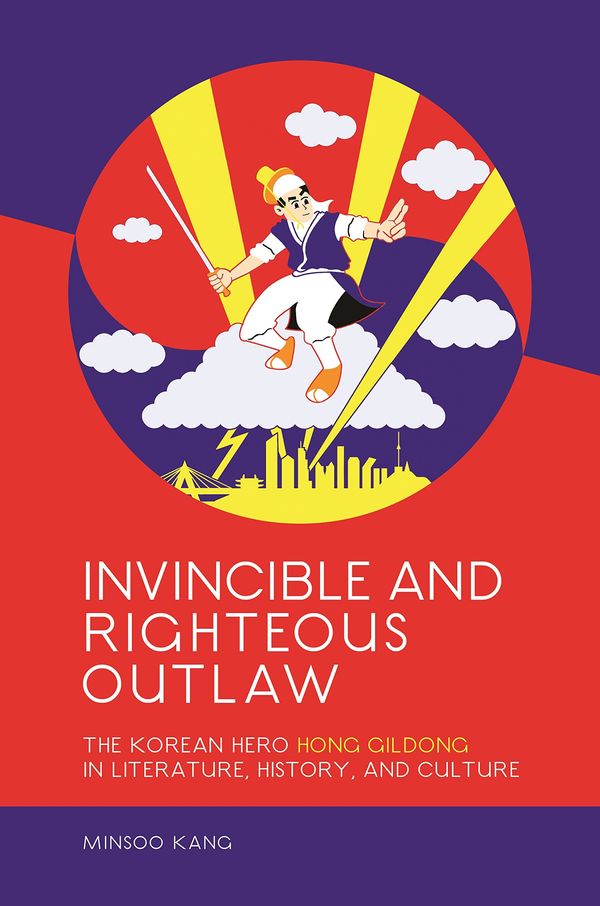
Invincible and Righteous Outlaw
A work of Non-fiction by Minsoo Kang
Subgenres:
- Literary Criticism,
- Korean History,
- Adaptation Studies
This book is for you if you're into...
- Deep dives into how legends are remade for new eras
- Myth-busting the origins of iconic stories
- Korean literature's evolution across politics, pop culture, and media
One of the most important and popular premodern Korean novels, The Story of Hong Gildong is a fast-paced adventure story about the illegitimate son of a nobleman who becomes the leader of a band of honest outlaws who take from the rich and punish the corrupt.
Despite the importance of the work to Korean culture—it is often described as the story of the Korean Robin Hood—studies of the novel have been hindered by a number of myths, namely that it was authored in the early sixteenth century by statesman Heo Gyun, who wrote it not only in protest of Joseon-dynasty laws on the rights of illegitimate children, but also as a manifesto of his own radical political ideas.
In Invincible and Righteous Outlaw, the first book-length study of the novel in English, Minsoo Kang reveals that The Story of Hong Gildong was most likely written by an anonymous mid-nineteenth-century writer whose primary concern was appealing to the increasing number of readers in the late Joseon looking to be entertained and that the myth of Heo's authorship can be traced to the writing of literary scholar Kim Taejun in the 1930s.
Following a detailed examination of the history and literary significance of the novel—including analysis based on Eric Hobsbawm's work on the universal figure of the noble robber—Kang surveys the many afterlives of the hero Hong Gildong, who throughout the decades has appeared and reappeared in countless revisionist novels, films, television dramas, and comics, even inspiring the creation of a Hong Gildong theme park in South Korea.
He shows how the story was altered, distorted, and reinvigorated during and after the Japanese colonial period in both the North and the South for political, social, and literary purposes.
While demonstrating the continued relevance of the novel and its hero in Korean culture up to the present day, Kang makes it clear that such narratives have served mostly to distance readers from a better understanding of this classic work.
Follow This Author
Sign up & we'll email you when a new title is available for pre-order or hits the bookshelf



Get Free & Discounted eBooks
Curated reads, irresistible prices—subscribe now