
Library Manager
Manage your library—your way. Keep a running list or organize the books you've read into little stacks. i.e. Beach Reads, Cozy Covers, True Crime, etc.
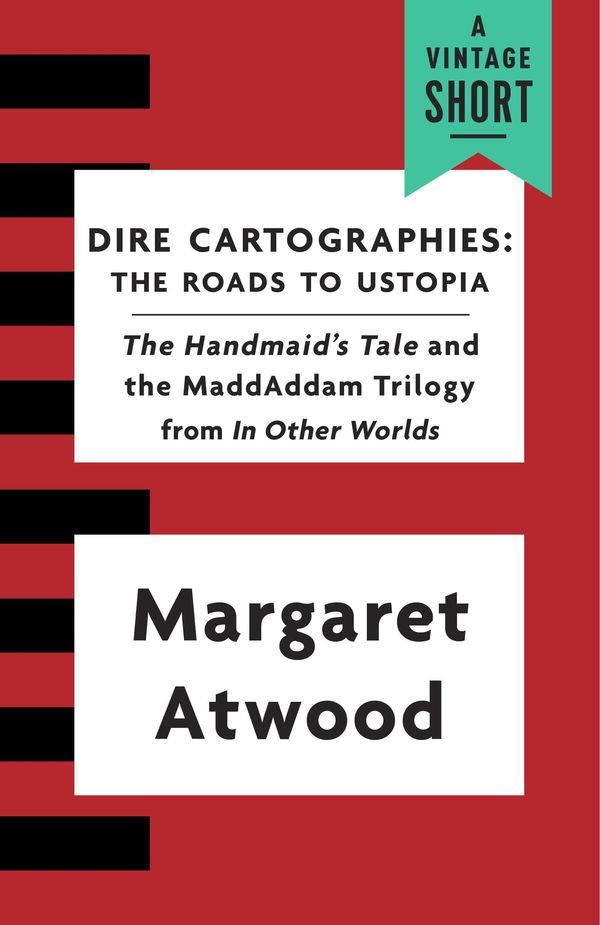
Dire Cartographies
A work of Non-fiction by Margaret Atwood
Subgenres:
- Literary Criticism,
- Writing About Writing
This book is for you if you're into...
- Deep dives into utopia and dystopia theory
- Authors unpacking their creative process and inspirations
In honor of the thirtieth anniversary of The Handmaid’s Tale: Margaret Atwood describes how she came to write her utopian, dystopian works.
The word “utopia” comes from Thomas More’s book of the same name—meaning “no place” or “good place,” or both.
In “Dire Cartographies,” from the essay collection In Other Worlds, Atwood coins the term “ustopia,” which combines utopia and dystopia, the imagined perfect society and its opposite. Each contains latent versions of the other.
Following her intellectual journey and growing familiarity with ustopias fictional and real, from Atlantis to Avatar and Beowulf to Berlin in 1984 (and 1984), Atwood explains how years after abandoning a PhD thesis with chapters on good and bad societies, she produced novel-length dystopias and ustopias of her own.
“My rules for The Handmaid’s Tale were simple,” Atwood writes. “I would not put into this book anything that humankind had not already done, somewhere, sometime, or for which it did not already have the tools.”
With great wit and erudition, Atwood reveals the history behind her beloved creations.
Follow This Author
Join & we'll email you when a new title is available for pre-order or hits the bookshelf



Get Free & Discounted eBooks
Curated reads, irresistible prices—subscribe now